Winning a customer is hard. Keeping them is harder.
In today’s hyper-competitive market, brands that thrive don’t just focus on customer acquisition—they invest heavily in the post-purchase experience. This is where customer loyalty, retention, and long-term revenue growth are built.
Customer-centric leaders like Amazon and Apple understand that the customer journey doesn’t end at checkout—it begins there.
This guide explores how to design a high-impact post-purchase strategy that increases repeat purchases, customer lifetime value (CLV), and brand advocacy.
Why Post-Purchase Experience Matters for Customer Retention
Many businesses optimize for traffic and conversions—but overlook what happens after the sale. That’s a costly mistake.
A well-designed post-purchase experience:
- Reduces buyer’s remorse
- Strengthens emotional connection
- Increases repeat purchase rate
- Boosts customer lifetime value (CLV)
- Encourages referrals and reviews
- Improves Net Promoter Score (NPS)
According to research published by Harvard Business Review, increasing customer retention by just 5% can significantly increase profits.
Customer loyalty is not accidental—it is intentionally designed.
The 5 Key Stages of a High-Impact Post-Purchase Experience
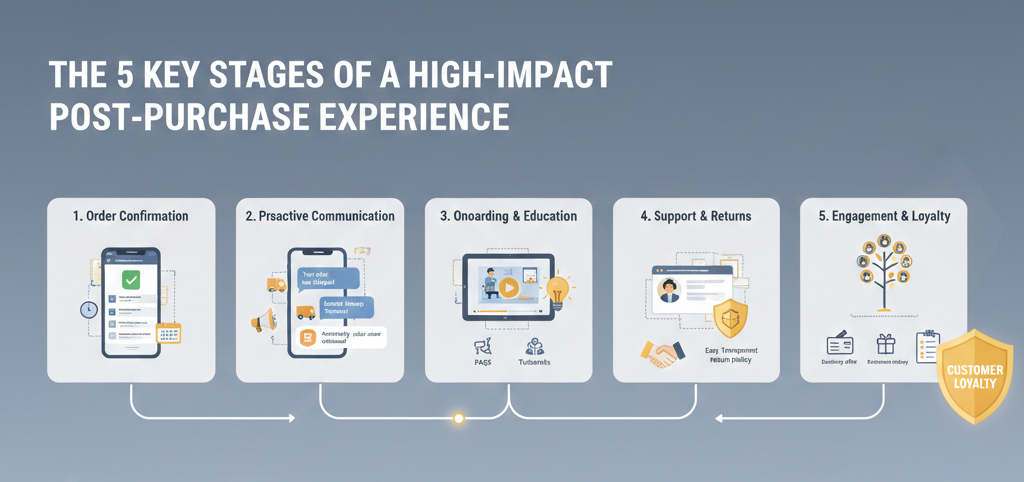
1. Order Confirmation & Immediate Reassurance
The moment after checkout is emotionally sensitive. Customers feel excitement—but also uncertainty.
Best Practices for Order Confirmation Emails:
- Clear purchase summary
- Transparent delivery timelines
- Tracking information
- Easy access to customer support
- A human, personalized thank-you message
A strong confirmation process reduces anxiety and builds trust from the start.
2. Proactive Customer Communication
Silence creates doubt. Proactive communication builds confidence.
Send:
- Real-time shipping updates
- Delay notifications (before customers ask)
- Product preparation instructions
- Setup guides or onboarding resources
Brands like Zappos are known for proactive customer service that transforms ordinary transactions into memorable experiences.
Proactive service increases customer satisfaction and reduces support tickets.
3. Customer Onboarding & Product Education
Customers don’t buy products—they buy outcomes.
If customers fail to achieve results quickly, churn increases.
Effective Post-Purchase Onboarding Includes:
- How-to videos
- Interactive email sequences
- FAQs and knowledge bases
- Webinars or tutorials
- Community access
The faster customers experience value, the stronger the loyalty.
4. Seamless Customer Support & Easy Returns
A complicated return process can destroy brand trust instantly.
Customer-first brands like Nordstrom built their reputation on flexible return policies and empowered service teams.
Post-Purchase Support Best Practices:
- Simple, transparent return policy
- Self-service portals
- Fast response times
- Omnichannel support (chat, email, social)
- Empowered support agents
Research consistently shows that a well-resolved issue often creates more loyalty than a flawless transaction.
5. Engagement Beyond the Transaction
Many brands disappear after delivery. Loyalty-driven brands stay present.
Create ongoing engagement through:
- Customer loyalty programs
- Personalized product recommendations
- Exclusive offers
- Community building
- Feedback requests
For example, Starbucks transformed routine coffee purchases into a habit-driven loyalty ecosystem through rewards and mobile engagement.
Loyal customers feel valued—not targeted.
Personalization: The Customer Loyalty Multiplier
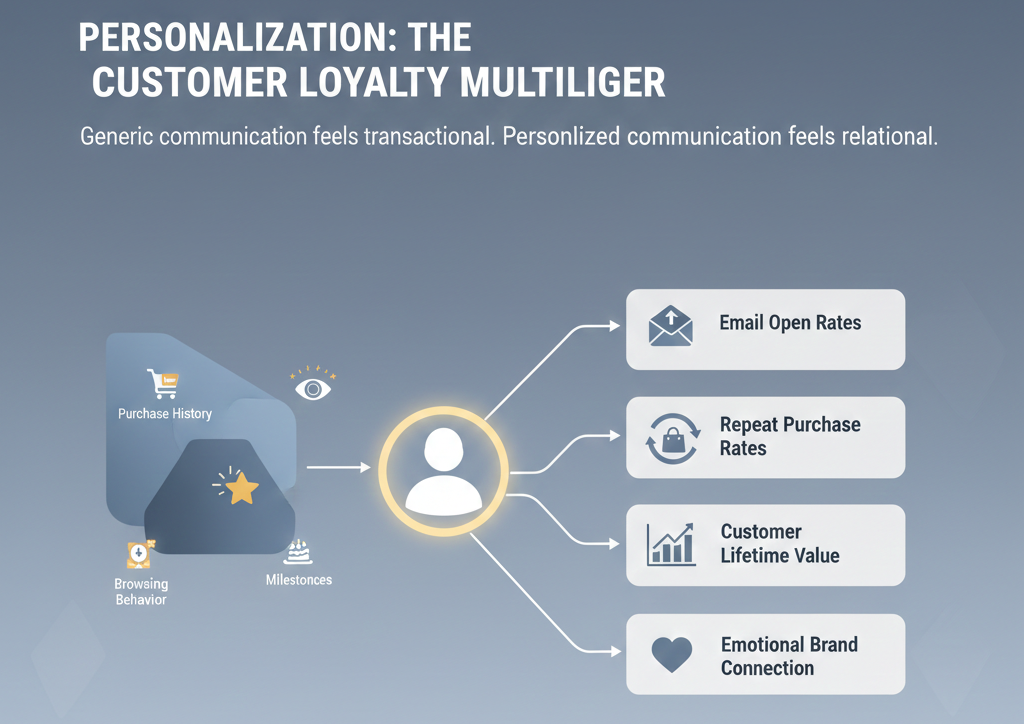
Generic communication feels transactional. Personalized communication feels relational.
Use data such as:
- Purchase history
- Browsing behavior
- Customer preferences
- Milestones (birthdays, anniversaries)
Personalization increases:
- Email open rates
- Repeat purchase rates
- Customer lifetime value
- Emotional brand connection
When customers feel understood, they stay longer.
Turning Customers Into Brand Advocates
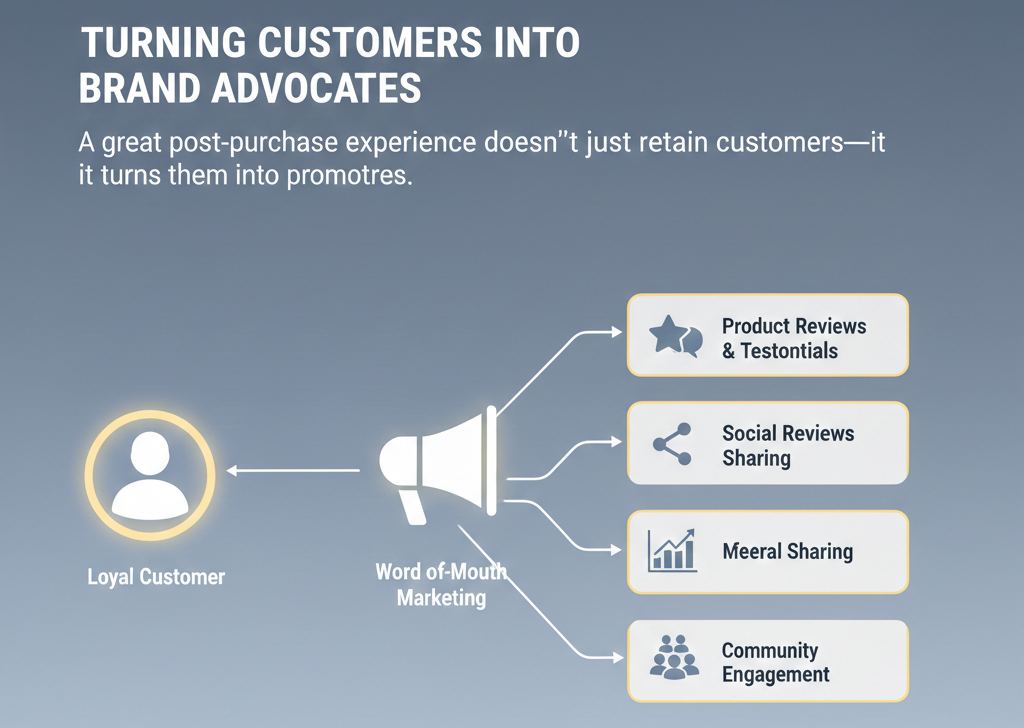
A great post-purchase experience doesn’t just retain customers—it turns them into promoters.
Encourage:
- Product reviews
- Testimonials
- Social media sharing
- Referral programs
Word-of-mouth marketing remains one of the highest-converting acquisition channels because it’s built on trust.
Measuring Post-Purchase Experience Success
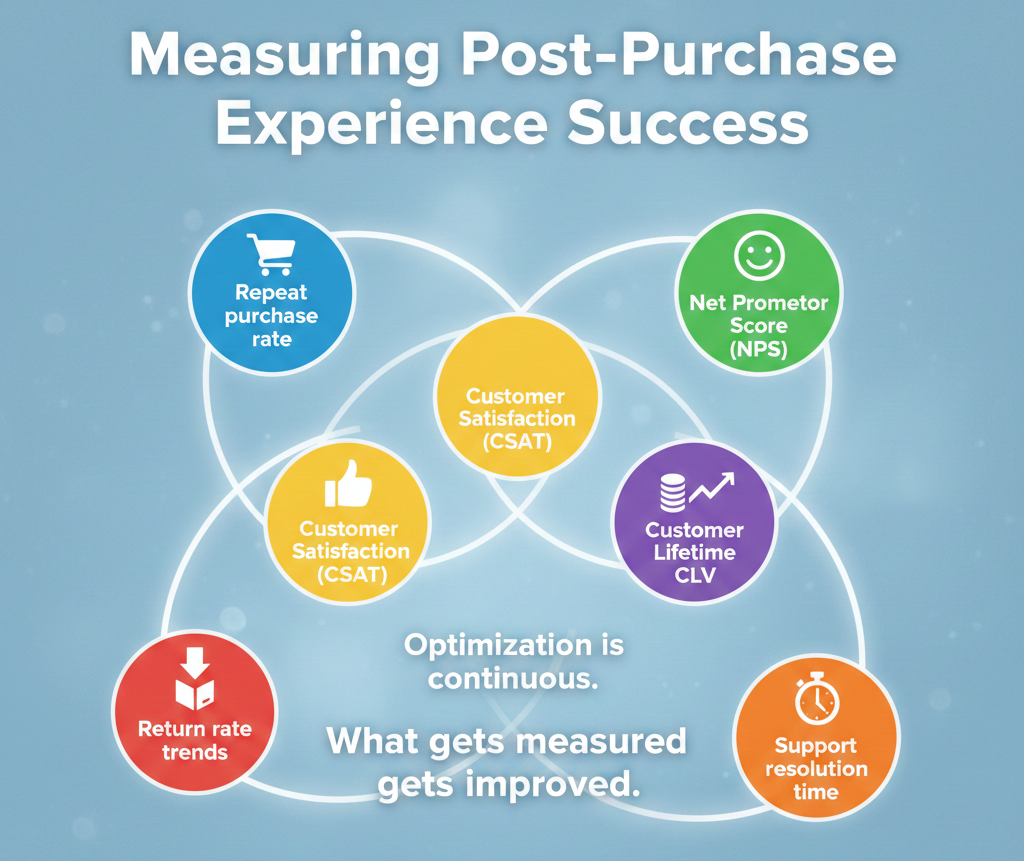
A data-driven loyalty strategy requires measurement.
Track:
- Repeat purchase rate
- Net Promoter Score (NPS)
- Customer Satisfaction (CSAT)
- Customer Lifetime Value (CLV)
- Return rate trends
- Support resolution time
Optimization is continuous. What gets measured gets improved.
Final Thoughts: Experience Is the Ultimate Competitive Advantage
Products can be copied. Prices can be matched. Technology can be replicated.
Customer experience cannot.
Brands that intentionally design their post-purchase journey build:
- Stronger emotional loyalty
- Higher lifetime value
- Greater profitability
- Sustainable competitive advantage
If you want long-term growth, don’t stop at conversion.
Design for loyalty. Optimize for retention. Build for lifetime value.